Aspects of the planets in astrology
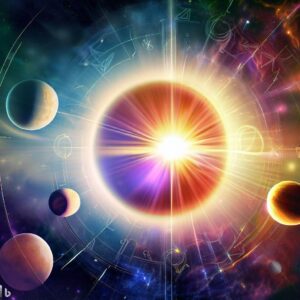
Aspect is the angular distance the planets form to each other. It is the flow of energy exchanged between the planets in the horoscope.
Depending on what aspect, what planet, good or evil, what sign it is in, strong for itself or not, such will be the flow of vibrations formed by the aspect, and as a consequence, the characteristics, character traits that the nativity is endowed with. Aspects also affect the series of events in a person’s life, showing periods of ups and downs.
They are divided into: harmonious and disharmonious.
Harmonious Aspects are: Trigon, Sextile, Semisextile, and Quicons.
Disharmonious ones are: opposition, square, semi-square, semi-square.
Conjunction or conjunction is also an aspect. It cannot be classified as harmonious or disharmonious, as it depends on the planets that form it.
Harmonious aspects help and favor a person. A large number of favorable aspects in the horoscope, on the one hand, make the life of the person more relaxed and balanced, and, on the other hand, prevent his or her noble development. After all, it is no secret that the growth of the level of consciousness, maturation, transformation always occurs through conflict, overcoming difficulties and obstacles.
Aspects that are disharmonious bring difficulties, imbalances in certain areas of life (see which houses affect this aspect), quarrels, and obstacles into the life of the individual. It is difficult for the individual to control his or her energy and power. There may be a surge, an upsurge and desire to act, or a complete collapse of strength.
Aspects are divided into major and minor.
In the horoscope, major aspects are indicated by a solid line. Minor aspects are indicated with a dotted line.
Major or Ptolemaic aspects are conjunction, opposition, square, trine and sextile.
Minor aspects include: semisextile, quicence, half-square, half-square.
Major aspects primarily affect a person’s life.
Connection (conjunction)
The conjunction is a powerful aspect because of the close interaction of the planets that make it up.
As we know, in astrology Saturn is a pest, it clamps and restricts, and Jupiter is a benefactor, it expands and enlarges. Let’s analyze the Sun-Saturn conjunction – a person is reserved, somewhat dry, structural, pragmatic, calculating. And the conjunction of the Sun with Jupiter, affects quite differently. A person will be generous, generous, optimistic, will see opportunities rather than obstacles.
When a conjunction forms three or more planets, it is called a stellium.
For example, the Sun at 290 Aries is in conjunction with Venus at 20 Taurus, and Venus, in turn, forms a conjunction with Mercury at 50 Taurus. Thus, the planets will intensify the effect on each other, to influence the person and his fate. In this example, the nativity possessing this conjunction will be aware of its desires, know what it wants, which will motivate it to manifest its “self”.
Stellium brings out the qualities of the sign, making it more obvious and prominent in a person’s horoscope. With this aspect, the energies of several planets mingle, creating a tension in the human soul that needs to be realized in the material world through activity and activity. The quality and coloring of the energy depend on the sign in which the stellium is located. What areas of life will be affected by this aspect, we will understand by identifying the houses ruled by the planets that formed the connection, including the house where the stellium is located.
Opposition
Opposition is an aspect that is disharmonious and unfavorable. The planets are at a distance of 1800, i.e. against each other. They “unite” two opposite signs, two opposite areas of life.
The opposition brings anxiety, resistance, insecurity, and separation to the subject. In fact, it is the person’s own actions, which rushes from one to the other, while doing the exact opposite. As a result, a stable state of affairs becomes unstable, the situation swings and can become uncontrollable.
In opposition, complexes and doubts, indecision and confusion can form. It indicates a confrontation with others, informs of troubles and disappointments that the individual may encounter.
Opposition helps us understand what we lack and lack, what qualities we need to work on and develop.
Square
Planets located at a distance of 900 from each other are in the signs of opposing verses, for example: Aries (fire) – Cancer (water), Aquarius (air) – Taurus (earth), etc.
The square gives its subject barriers, fear, obstacles, unexpected troubles, disturbances.
If the opposition is a permanent aspect, the square is a sudden aspect.
It is a difficult aspect. It is very strong and powerful. Empowering the possessor with powerful energy. Its presence in a natal chart foreshadows a struggle for the realization of ideas and intentions, in those areas of life, the houses that this aspect brings together. The individual will be confronted with difficulties, but as the aspect is gained, the Aspect Commander either becomes strong and courageous and success is not fleeting, or the individual becomes dependent on more powerful people, losing his or her autonomy.
This aspect indicates irritants. The areas of life affected by the square are important to the nativist, but there is no certainty there, no stability, the ground can leave under one’s feet at any moment. The square indicates where the nativist will struggle the most.
A person with this aspect in his chart needs to learn stamina, patience, and develop courage and perseverance.
Sextile
This is an aspect that is formed by planets that are 600 apart.
It is harmonious and favorable, but of medium strength. These are the opportunities that are open to the nativity, provided that one works consciously and diligently in the directions, spheres, about which the sextile speaks. The possessor of this aspect, it is necessary to show willpower, strength of mind, and persistence in achieving what is desired.
It is a weaker aspect than the trine. But still it provides the nativity with a good fortune, a chance, an increase in the probability of success.
Trigon
A trigonal aspect unites planets that are 1200 apart. It is stronger when it unites planets that are in one element. In this case, its effect is multiplied many times over.
It is the most benefic aspect. Depending on the planets that form it, the areas of life and the elements in which it is located, it bodes well for good luck, happiness, victory, success, all manner of talents, and wealth.
If the natal chart has many trigonal aspects, the nativist is a lucky person, achieving success without much effort, doors open to him, and the person gets what he wants without difficulty. On the negative side, the nativ does not develop willpower, spirit, or perseverance. This aspect does not contribute to the formation of personality. It is only the gifts earned in past incarnations.
Semisextile
Semisextile is a weak, minor aspect, and does not always work. The orb is extremely important, the maximum permissible is 1,500. Unites the planets located at a distance of 300.
It describes character traits, indicating benevolence, conscientiousness, friendliness, conscientiousness, neatness.
He provides assistance to his ward, and can also tell about the intentions of the nativity.
Quicons
Like the previous aspect, weak, minor, does not always work. Orb is also important, the maximum allowed is 1,500. This aspect is formed by planets at 1500.
It is an aspect of return situations, of repetition. It encourages the initiate to go over and over the lessons that either he did not learn or learned poorly.
The semi-square
This aspect is formed by the planets at a distance of 450. It is minor and weak. Orb is important and the maximum allowed is 1.50.
It promises its subject short-term and minor disturbances and delays, temporary mishaps that manifest themselves in ordinary daily life.
Half Square
The half square is formed by the planets at 1350.
It is also an aspect of weak force, as it is a minor aspect. Its action is only possible if the planets deviate from the exact aspect by a maximum of 1.50.
The semi-square often speaks of intrigue, gossip, and unpleasant conversations, more often than not, the subject of which is the aspect holder. It rather refers to the immediate environment of the nativity. Its effect is manifested at the everyday, worldly level.